How the Claim Investigation Process Works: What to Expect When Insurers Review Your Case
Insurance Claim Investigation Process Explained

Content
File an insurance claim and you're probably thinking: "When do I get paid?" That's a fair question. But here's what catches people off guard—your insurer might dig deeper than you expected. Sometimes way deeper.
A formal investigation doesn't mean they think you're committing fraud. Could be routine. Could be triggered by something you haven't even considered. Either way, knowing what happens behind the scenes makes everything less stressful. You'll know which documents matter most, which questions to expect, and why that adjuster keeps asking for "just one more thing."
The difference between a claim that pays in two weeks versus two months? Often comes down to understanding what investigators actually do with your information.
Why Insurance Companies Investigate Claims
Three things drive every investigation: stopping fraud, confirming your policy covers what happened, and figuring out exactly how much they owe you. Simple enough, right?
Here's where it gets interesting. Your $800 cracked windshield claim gets a completely different treatment than your neighbor's $80,000 house fire claim. Both involve investigations, but the intensity varies wildly.
Basic reviews happen automatically. An adjuster pulls up your policy within hours of your first call. They're checking obvious stuff—did you actually pay last month's premium? Does your policy even cover hail damage? Did your story change between the roadside call and the formal written report? These routine checks wrap up fast when everything lines up cleanly.
Then there's the other kind. Certain situations make insurers nervous. A $200,000 jewelry theft claim filed three weeks after you bought the policy? They're going to ask questions. Lots of questions. Same deal if you're filing your fourth claim this year, or if your "accident" description doesn't match the damage pattern investigators see on your vehicle.
Filing history tells a story. One claim every five years looks normal. Three water damage claims in eighteen months? That pattern gets flagged in their system before a human even reads your file. Maybe you've got old pipes and bad luck. Maybe something else is going on. Either way, expect scrutiny.
The fraud issue isn't theoretical. According to Coalition Against Insurance Fraud research, bogus claims drain more than $308 billion annually from the system. That's not just the insurance company's problem—it's why your premiums keep climbing. Every fake whiplash claim and staged accident pushes rates higher for everyone else.
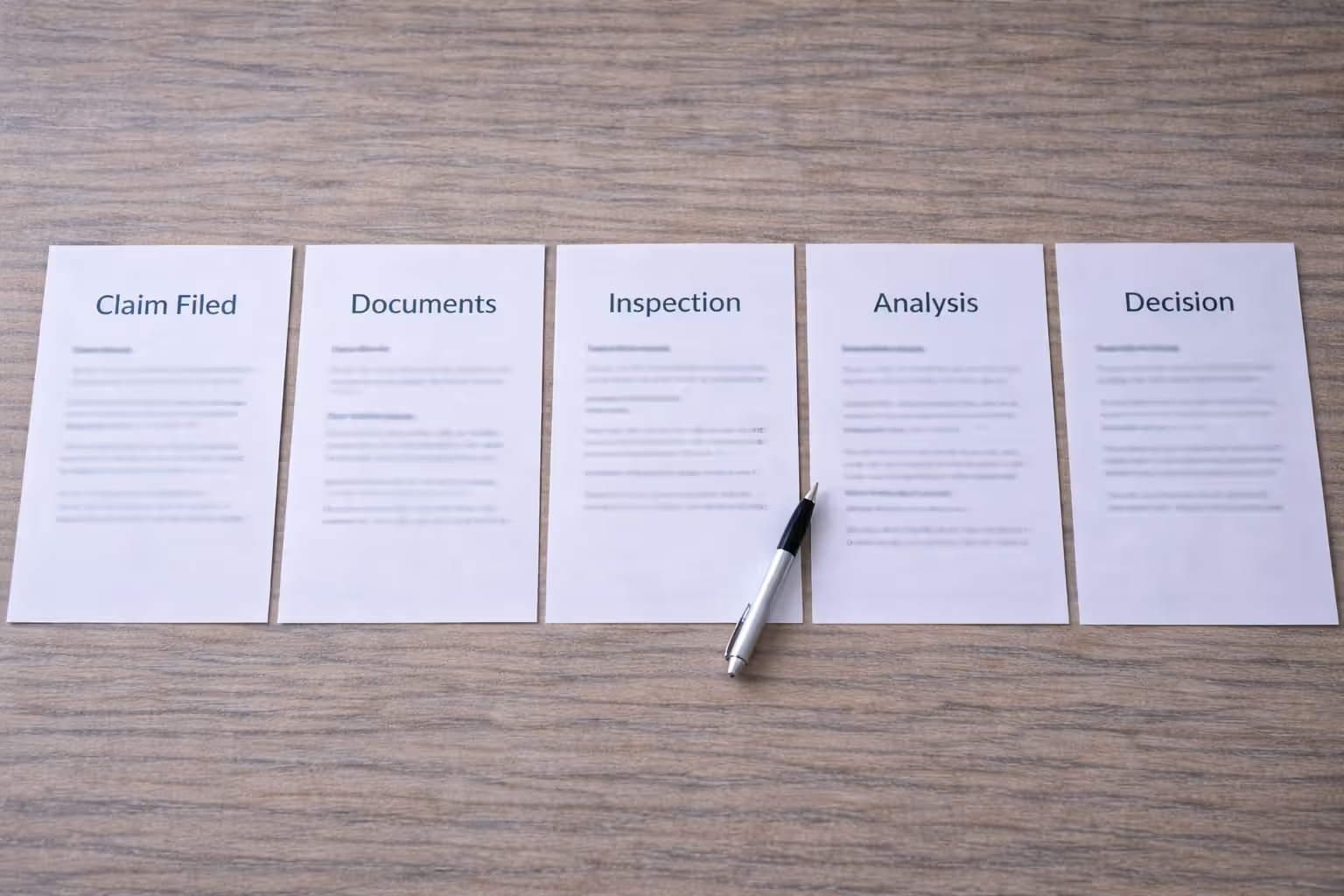
The 5 Stages of a Standard Claim Investigation
Author: Michael Stanton;
Source: everymuslim.net
Initial Claim Submission and Assignment
Your investigation starts before you hang up the phone. The insurer's system logs everything—date, time, your initial description—and assigns a claim number. This isn't sitting in someone's inbox waiting for Monday morning. Automated systems start working immediately.
Software runs background checks within minutes. It's comparing your claim against databases of known fraud patterns, checking if someone else filed a similar claim at your address recently, and scanning for duplicate submissions. These digital fraud prevention systems catch obvious problems before any human involvement.
Then a real person takes over. Simple claims—minor fender benders, small water leaks—go to general adjusters handling hundreds of files monthly. Complex or suspicious claims land with specialized investigators who might handle just a dozen cases at once. That assignment alone tells you something about how they view your situation.
Your adjuster immediately reviews your policy's declarations page. Active coverage? Premium payments current? Any exclusions that might apply? Water damage from a burst pipe gets handled differently than flood damage, which needs separate coverage. Getting this distinction wrong at the beginning wastes weeks sorting it out later.
Document Collection and Verification
Now comes the paperwork phase. For property damage, expect requests for photos, contractor estimates, receipts, and proof you actually owned what you're claiming. Car accidents? They want police reports, medical records for injuries, possibly even maintenance logs. Life insurance triggers requests for death certificates, medical examiner reports, and beneficiary documentation.
But here's what most people miss—submitting documents is just step one. Verification is step two, and it's thorough. Investigators don't just check that you attached a contractor's estimate. They call the contractor directly: "Did you really inspect this property? Is this your actual estimate? When did you visit the site?"
Medical providers get similar calls confirming they treated you. Police departments verify report numbers. Receipts get cross-checked against store records when amounts seem suspicious. That legitimate-looking repair quote might trigger a verification call to confirm someone actually came out and looked at your damage.
Missing paperwork doesn't automatically sink your claim, but it definitely stalls things. Say you're claiming $15,000 in stolen jewelry without photos, receipts, or appraisals. You'll face detailed questioning: When did you buy each piece? Which stores? Can credit card statements prove these purchases? Do you have any photos wearing these items, even casual social media posts? The more proof you provide upfront, the faster this phase moves.
Field Investigation and Interviews

Author: Michael Stanton;
Source: everymuslim.net
Claims above certain dollar amounts—or those triggering red flags—get in-person attention. An investigator might visit your property to photograph damage, talk with witnesses who saw what happened, or examine physical evidence like how your car's damage pattern matches (or doesn't match) your accident description.
Recorded statements happen frequently at this stage. You'll describe the incident in detail while they record everything. Timeline, circumstances, specific details about what happened—it all gets captured. These recordings become permanent claim file attachments. Inconsistencies between your recorded statement and earlier reports create serious problems, even when innocent mistakes explain the differences. Saying the accident happened at 3 PM on your first call but 6 PM in your recorded statement requires explanation.
Surveillance occurs more often than people realize, especially for injury claims involving alleged disability. Claim your back injury prevents working, but investigators film you hauling heavy furniture into your house? Your claim's getting denied, and fraud charges might follow.
Third-party interviews verify your account independently. Auto accident investigators contact other drivers, passengers, witnesses, even nearby businesses with security cameras that might have captured footage. Property claims might involve interviewing neighbors who witnessed the incident or contractors who'd previously worked on your home and can speak to its prior condition.
Analysis and Fraud Screening
Everything collected feeds into analysis. Adjusters compare your account against physical evidence, witness statements, and documentation. They're looking for consistency—or contradictions that need explanation.
Specialized databases come into play now. The National Insurance Crime Bureau maintains records of prior fraud cases, stolen vehicle histories, and suspicious claim patterns. ISO ClaimSearch reveals claims you filed with other insurers, exposing patterns you might not voluntarily disclose. These systems connect dots across the entire industry.
Modern investigations increasingly rely on digital evidence analysis. Photos you submit contain metadata showing exactly when and where they were taken. Claim your damage happened Tuesday, but photo metadata reveals the images were captured the previous week? That's a problem requiring immediate explanation. Social media posts often contradict injury claims or prove you were somewhere different than claimed during an incident.
Financial background checks appear in major claims. Investigators examine whether you're facing foreclosure, bankruptcy, or significant debt that could motivate exaggerating losses or staging incidents. Financial stress alone doesn't prove fraud, but it provides context investigators weigh alongside other evidence.
Final Determination
The adjuster compiles findings into a comprehensive report recommending approval, partial approval, or denial. Approved claims include settlement amounts based on verified losses, applicable deductibles, and policy limits.
Supervisors review these reports before final decisions, particularly for denials or high-value approvals. This quality control layer catches errors and ensures decisions align with company standards and legal requirements.
You receive written determination explaining the decision. Approvals detail payment schedules and amounts. Denials must cite specific policy provisions or evidence justifying rejection. Partial approvals explain which portions were approved and why others weren't covered.
What Investigators Actually Verify During the Review Process
Specific verification steps target elements that confirm legitimate claims while exposing fraudulent ones.
Policy validity and coverage applicability get confirmed first. Was your policy active when the loss occurred? Were premiums current? Does the specific loss type fall within covered perils? A lapsed policy from missed premium payments means zero coverage, regardless of how legitimate your loss might be.
Loss circumstances and causation receive intense examination. For property damage, investigators determine what actually caused the loss and whether that cause qualifies as covered. A roof collapse from years of neglected maintenance differs fundamentally from collapse caused by sudden storm damage, even when the end result looks identical.
Damage assessment and valuation involves comparing claimed losses against actual evidence. Vehicle damage gets examined for consistency with your accident description. Rear-end collisions shouldn't produce side-panel damage unless additional impacts occurred that you didn't mention. Property claims require verifying that claimed damage actually exists and that its extent justifies your estimated repair costs.
Witness statement corroboration tests whether independent accounts support your version. Conflicting witness statements don't automatically prove you're lying—people remember details differently—but significant contradictions demand explanation.
Medical necessity and treatment reasonableness matter for injury claims. Did medical providers actually treat you? Do treatments relate directly to the claimed incident? Does treatment extent align with injury severity? Someone claiming ongoing disability from a minor accident while simultaneously refusing recommended treatment raises obvious questions.
Timeline consistency across all statements and documentation must align. Report an incident to police at 3 PM but tell your insurer it happened at 6 PM? Investigators need to understand that discrepancy. Sometimes explanations are simple—you misremembered the exact time—but every inconsistency triggers additional questions.
How Long Does an Insurance Claim Investigation Take?
Timelines vary dramatically based on what you're claiming and how complicated the situation gets.
| Type of Claim | Simple Cases | Complicated Cases |
| Auto damage (no injuries) | 1-2 weeks | 4-8 weeks |
| Auto accidents with injuries | 2-4 weeks | 8-26 weeks |
| Minor home damage | 10-21 days | 4-12 weeks |
| Major property loss or total destruction | 4-8 weeks | 12-26+ weeks |
| Health claims | 2-4 weeks | 6-12 weeks |
| Life insurance payouts | 4-8 weeks | 12-26 weeks |
| Disability benefits | 6-12 weeks | 16-52+ weeks |
What pushes investigations past these typical ranges? Several factors add weeks or months.
Uncooperative claimants create the longest delays. Don't respond to information requests? Miss scheduled appointments? Every follow-up attempt and rescheduled interview resets the clock. Some adjusters handle 100+ files simultaneously—yours won't be prioritized if you're making their job harder.
Multiple parties complicate everything. A four-vehicle accident needs statements from all drivers plus passengers. Coordinating everyone's schedules with investigator availability takes time, and conflicting accounts require additional investigation to resolve.
Subrogation investigations—where your insurer seeks recovery from responsible third parties—extend timelines significantly. Your insurer must coordinate with other insurance companies, attorneys, and potentially court systems. This back-and-forth operates on its own schedule beyond your control.
Catastrophic events overwhelm adjusters with simultaneous claims. Hurricane, wildfire, or major tornado? Your individual claim competes for attention with thousands of others. Insurers deploy temporary adjusters during these periods, but volume still creates substantial delays.
J.D. Power's 2023 Auto Claims Satisfaction Study found typical auto claims settle in 13.5 days without complications. Add investigation complications like suspected fraud or coverage disputes? That jumps to 47 days average.
Red Flags That Trigger Enhanced Fraud Prevention Checks
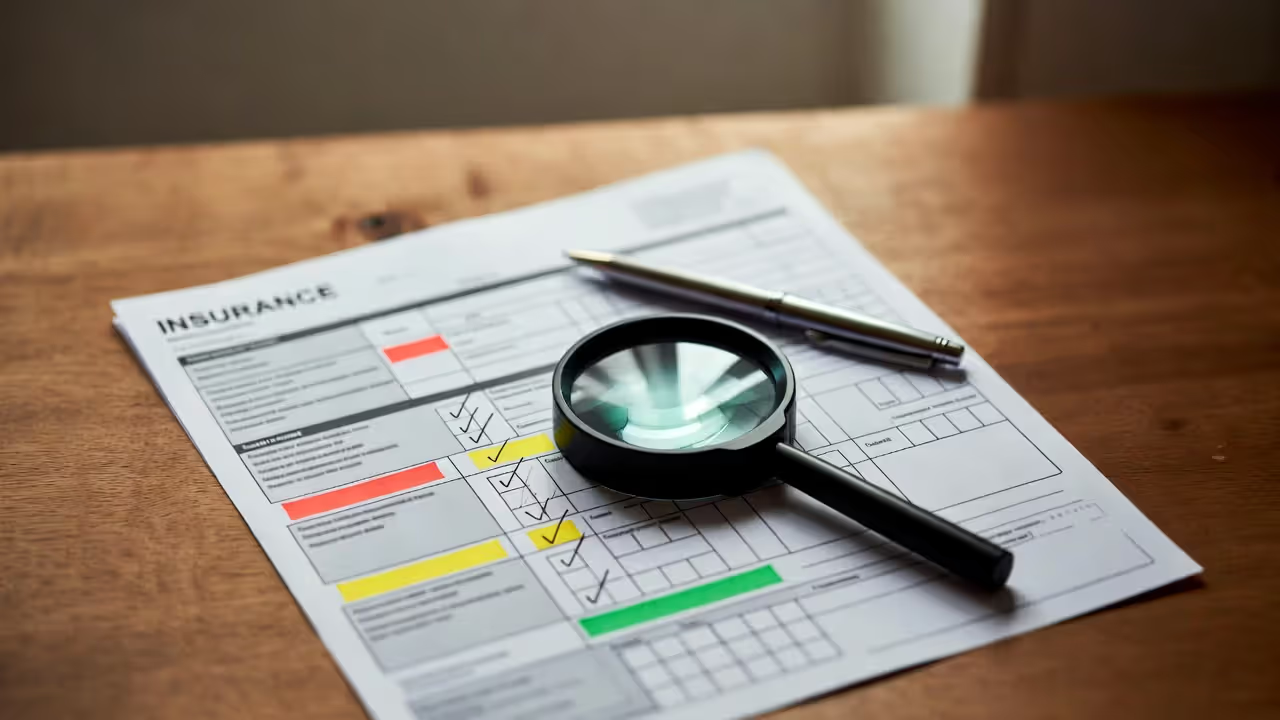
Certain patterns consistently appear in fraudulent claims. Adjusters receive training to spot these warning signs immediately.
Author: Michael Stanton;
Source: everymuslim.net
Recent policy changes right before a loss create suspicion. Substantially increasing coverage limits just weeks before filing a major claim suggests possible planning. Sure, legitimate policyholders sometimes increase coverage coincidentally before losses occur, but timing alone triggers enhanced review.
Excessive or unusual losses compared to typical claims for similar incidents raise immediate questions. A $50,000 personal property loss from a kitchen fire in a modest 1,200-square-foot home requires extensive documentation. High-value claims need equally robust proof of ownership and value.
Vague or inconsistent descriptions of how incidents occurred signal potential problems. Legitimate claimants usually remember details clearly, especially for recent events. Story changes between initial reports and later statements—even small shifts in details—prompt investigators to question why the narrative evolved.
Lack of supporting documentation despite claiming significant losses appears suspicious. Modern smartphones make photographing damage trivially easy, yet some claimants provide zero visual evidence. Not impossible, but unusual enough to warrant detailed questioning.
Prior fraud indicators in industry databases flag claims automatically. Past involvement in suspicious claims, even without proven fraud, places current claims under enhanced scrutiny. Association with known fraud rings or addresses linked to multiple suspicious claims triggers immediate investigation.
Reluctance to cooperate with reasonable requests suggests something to hide. Refusing recorded statements, dodging scheduled appointments, or becoming hostile when asked standard questions raises investigator suspicions. Legitimate claimants typically want to provide information supporting their claims.
Insurance fraud consequences extend well beyond claim denial. Insurers report suspected fraud to state fraud bureaus and law enforcement. Depending on claim value and circumstances, charges range from misdemeanors to felonies carrying potential prison time. Convictions create criminal records affecting employment prospects and future insurance availability. Even without criminal prosecution, insurers share fraud information industry-wide, making it extremely difficult or impossible to obtain coverage elsewhere.
Documentation You'll Need to Provide During Investigation
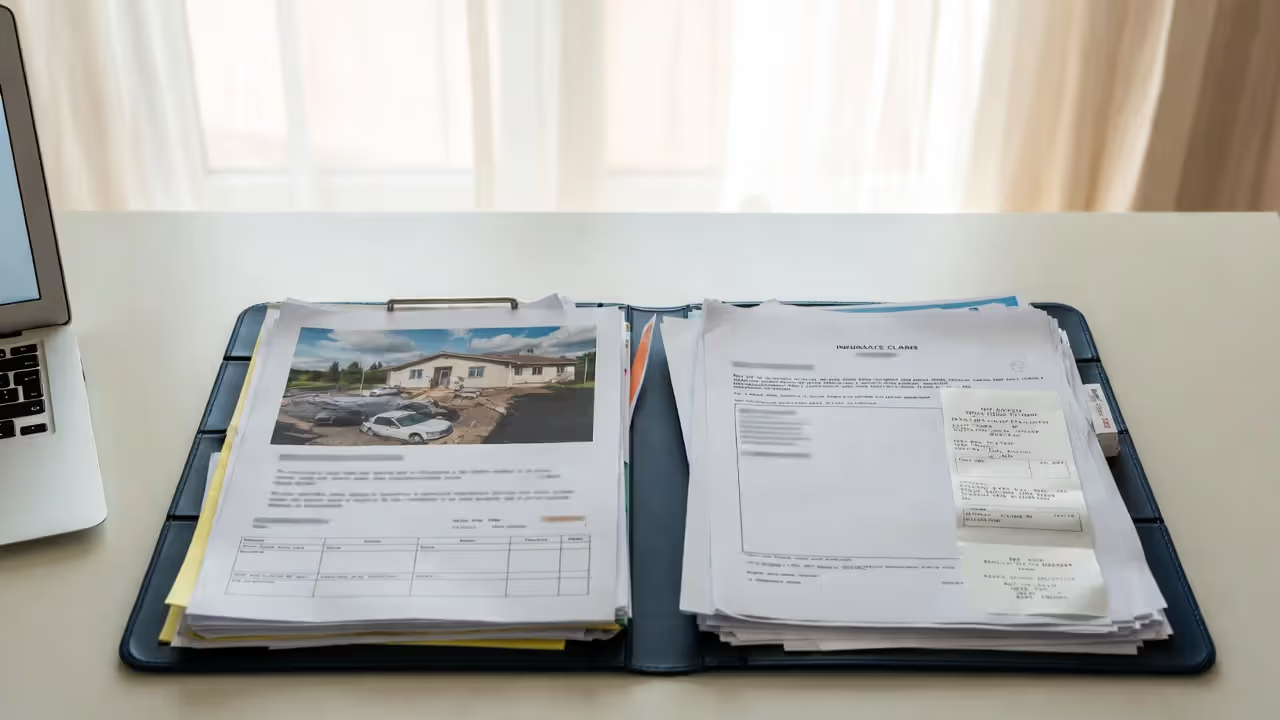
Strong documentation accelerates investigations and improves outcomes. Requirements vary by claim type, but certain categories appear consistently.
Author: Michael Stanton;
Source: everymuslim.net
For property damage claims: - Multiple-angle photos or videos of all damage - At least two repair estimates from licensed, insured contractors - Purchase receipts or proof of ownership for damaged items - Home improvement records documenting property condition before the loss - Police or fire department incident reports with case numbers - Receipts for temporary repairs (hotels during displacement, emergency tarps, board-up services)
For auto accident claims: - Official police accident report including case number - Comprehensive photos of all vehicle damage and accident scene - Other driver's insurance details and contact information - Witness names with contact information - Complete medical records and itemized bills if injuries occurred - Vehicle maintenance history (sometimes requested for mechanical failure claims) - Rental car receipts if temporary transportation was needed
For injury or medical claims: - Complete medical records from every treating provider - Itemized bills detailing services received and associated costs - Prescription records with pharmacy receipts - Employer documentation of missed work and calculated lost wages - Pre-existing condition medical history (insurers can legally request this) - Photos documenting visible injuries and healing progression over time
For theft claims: - Police report filed promptly after discovering the theft - Serial numbers for stolen electronics, tools, or equipment - Purchase receipts, credit card statements, or bank transaction records - Photos showing items before theft (check old social media posts for evidence) - Appraisals for jewelry, artwork, or collectibles - Home security system footage if available
Common mistakes unnecessarily weaken otherwise legitimate claims. Waiting too long to photograph damage means conditions change—weather exposure, additional deterioration, or repairs you make for safety all alter the scene. Immediate photos preserve evidence in its original state.
Throwing away damaged items before adjuster inspection creates problems. That water-damaged furniture you hauled to the curb might have provided evidence supporting your claimed amount. Ask your adjuster before disposing of anything significant.
Accepting the first repair estimate without question sometimes leaves money on the table. If your contractor's estimate seems low compared to actual work needed, get a second opinion. Adjusters respect thorough documentation from qualified contractors more than lowball estimates.
Missing deadlines for document submission can result in outright denial. Most policies include "cooperation clauses" requiring you to provide requested information within reasonable timeframes. Repeated failure to submit documents gives insurers grounds to deny based on non-cooperation rather than addressing your claim's actual merits.
What to Do If Your Claim Investigation Is Taking Too Long
Investigations sometimes drag well beyond reasonable timelines. You've got options when this happens.
Track all communication from the very beginning. Keep a detailed log showing dates, times, and names of every person you speak with. Document what was discussed and any commitments made. This record becomes invaluable if you need to escalate or file formal complaints later.
Contact your adjuster directly before assuming something's wrong. Sometimes delays have simple explanations—waiting for a third-party report, scheduling conflicts, or administrative backlogs. A polite inquiry about current status often produces immediate action if your file was inadvertently stalled.
Request supervisor involvement if your adjuster remains unresponsive. Speak directly with the adjuster's manager. Explain how long the investigation has lasted and identify specific actions that seem stalled. Supervisors can reallocate resources or expedite reviews stuck in queue.
Send formal written requests via certified mail if phone calls produce no results. Written communication creates official records and typically prompts faster responses than phone calls alone. Reference your policy number, claim number, and specific information or actions you're requesting.
File a complaint with your state insurance department when insurers violate prompt payment laws. Most states mandate specific timeframes for acknowledging claims, conducting investigations, and issuing payments or denials. State insurance commissioners take these violations seriously and can pressure insurers to act.
State insurance departments provide free assistance: - California: Department of Insurance, 800-927-4357 - Texas: Department of Insurance, 800-252-3439 - Florida: Department of Financial Services, 877-693-5236 - New York: Department of Financial Services, 800-342-3736 - Illinois: Department of Insurance, 866-445-5364
Find your state department through the National Association of Insurance Commissioners website (naic.org).
Consider hiring a public adjuster for complex claims where delays seem designed to frustrate you into accepting low settlements. Public adjusters work for you, not the insurance company, and handle all investigation communication on your behalf. They typically charge 5-15% of your final settlement but can substantially increase payments for complicated claims.
Consult an attorney if you suspect bad faith handling. Insurance bad faith occurs when insurers unreasonably delay, deny, or underpay legitimate claims. Attorneys specializing in insurance disputes can evaluate whether your situation warrants legal action. Many offer free initial consultations and work on contingency for valid cases.
David Sampson, former Florida Insurance Commissioner, addressed this balance in a 2022 consumer protection statement:
Thorough claim investigations protect everyone by keeping premiums stable, but insurers must balance fraud prevention with their duty to handle legitimate claims promptly and fairly. Policyholders facing unreasonable delays have every right to demand action and seek regulatory intervention when necessary.
— David Sampson
FAQ: Common Questions About Claim Investigations
Moving Forward With Your Claim Investigation
The claim investigation process protects the insurance system's integrity while ensuring legitimate claims receive proper payment. Understanding what investigators examine, maintaining organized documentation, and responding promptly to requests positions you for the best possible outcome.
Most investigations conclude favorably when claimants provide thorough documentation and cooperate fully with reasonable requests. Even when investigations extend beyond initial time estimates, patience combined with persistent follow-up usually produces resolution.
If your investigation drags beyond reasonable timelines or you face what seems like unjustified denial, remember you have resources. State insurance departments, public adjusters, and attorneys specializing in insurance disputes can level the playing field when insurers don't handle claims appropriately.
The documentation you maintain, the consistency of your statements, and your responsiveness to investigator requests matter more than any other factors in determining how smoothly your claim investigation proceeds. Treat the process seriously, but don't let it intimidate you from pursuing the coverage you've been paying for through your premiums.